English
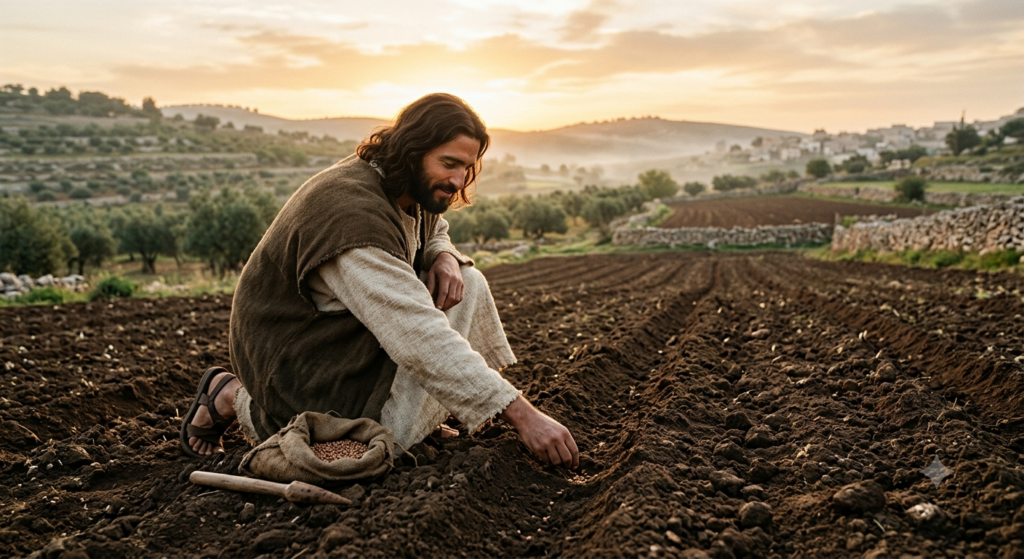
We know the parable of the farmer sowing the seed. But did you know how much that seed cost? For that bag of seed, it would have cost at least 1 day’s wage. In our time, that would be around 60 dollars. Ok, now look at the story again. The farmer goes out with his expensive bag of seed and throws it all over the place! He is clearly not a very good farmer. Nobody would do what this guy did. It is a complete waste of time and resources. Now when we look at this from a spiritual perspective, we see that our Lord is going to proclaim the kingdom to everyone, not just those who will respond and bear fruit.
As someone who doesn’t like to waste things, this story bothers me. Why are you wasting the seed on places where it will not grow or bear fruit? But ultimately, there is a bigger story than just the efficiency of planting crops. The soil is the state of our souls. And let’s be honest. Our souls are not the good soil that bears 30 or 60 or 100-fold. Our souls are so often hardened against following the commands of the Lord, or preoccupied with wealth or worldly things, or are just simply too busy to focus on following Him.
People often call the church office looking for help with food or gas or bills. And each time, I call them back and we begin to have a conversation. I spoke with one young man who told me that he had grown up in a church, but he has been so busy with surviving that he has not had time to go. Of course, I told him that he needed to get his priorities back in order, but let’s face it, maybe we can sympathize with him. He is struggling. He works long hours and doesn’t have a working car. Why should he prioritize coming to church? Doesn’t he have enough to worry about?
The purpose of coming to Church is to participate in the perfect sacrifice of Christ and be transformed by our encounter with him. The rough soil of our hearts is not beyond repair when we come to seek the Lord. He spreads the seed, and as we spend time in his presence, we are able to receive the Word, and bear fruit in our lives.
Now this is not an automatic process. This happens when we begin to meditate in our prayer. That is, when we use our thoughts, feelings and desires to pray. For example, I think about the cost of the bag of seed, and I think it is a waste of good resources. I share my feelings of frustration at that farmer who is not doing his job well. Then our Lord opens my mind to recognize that I am the soil beneath that farmer’s feet. And now I am grateful that the Lord is choosing to plant the seed in me. And I desire to become even better soil, recognizing that I have not placed him at the center of my life as I should have. I leave this prayer session with a concrete plan in place. I will devote myself to prayer for at least 1 hour a day, meditating on the Lord’s word, so that I may bear fruit in my own life and in the lives of those around me.
Spanish
Conocemos la parábola del agricultor que siembra la semilla. ¿Pero sabías cuánto costaba esa semilla? Por esa bolsa de semillas, habría costado al menos un día de salario. En nuestra época, eso serían unos 60 dólares. Vale, ahora mira la historia otra vez. ¡El granjero sale con su costosa bolsa de semillas y la tira por todas partes! Claramente no es un buen agricultor. Nadie haría lo que hizo este tipo. Es una completa pérdida de tiempo y recursos. Ahora, cuando lo vemos desde una perspectiva espiritual, vemos que nuestro Señor va a proclamar el reino a todos, no solo a quienes respondan y darán fruto.
Como alguien a quien no le gusta desperdiciar cosas, esta historia me molesta. ¿Por qué desperdicias la semilla en lugares donde no crecerá ni dará fruto? Pero, en última instancia, hay una historia más grande que la eficiencia de plantar cultivos. La tierra es el estado de nuestras almas. Y seamos sinceros. Nuestras almas no son la buena tierra que soporta 30, 60 o 100 veces más. Nuestras almas a menudo están endurecidas para no seguir los mandamientos del Señor, o están preocupadas por la riqueza o cosas mundanas, o simplemente están demasiado ocupadas para centrarse en seguirle.
La gente suele llamar a la oficina de la iglesia buscando ayuda con la comida, la gasolina o las facturas. Y cada vez, les llamo y empezamos a tener una conversación. Hablé con un joven que me dijo que había crecido en una iglesia, pero que ha estado tan ocupado sobreviviendo que no ha tenido tiempo para ir. Por supuesto, le dije que necesitaba poner sus prioridades en orden, pero seamos sinceros, quizá podamos simpatizar con él. Está pasando por un mal momento. Trabaja muchas horas y no tiene coche en funcionamiento. ¿Por qué debería priorizar ir a la iglesia? ¿No tiene ya bastante de qué preocuparse?
El propósito de venir a la Iglesia es participar en el sacrificio perfecto de Cristo y transformarnos por nuestro encuentro con él. La tierra áspera de nuestros corazones no está irreparable cuando venimos a buscar al Señor. Él esparce la semilla, y a medida que pasamos tiempo en su presencia, podemos recibir la Palabra y dar fruto en nuestras vidas.
Esto no es un proceso automático. Esto ocurre cuando empezamos a meditar en nuestra oración. Es decir, cuando usamos nuestros pensamientos, sentimientos y deseos para orar. Por ejemplo, pienso en el coste de la bolsa de semillas, y pienso que es un desperdicio de buenos recursos. Comparto mis sentimientos de frustración hacia ese granjero que no está haciendo bien su trabajo. Entonces nuestro Señor abre mi mente para reconocer que soy la tierra bajo los pies de ese campesino. Y ahora estoy agradecido de que el Señor esté eligiendo plantar la semilla en mí. Y deseo convertirme en un terreno aún mejor, reconociendo que no le he puesto en el centro de mi vida como debería haberlo hecho. Salgo de esta sesión de oración con un plan concreto en marcha. Me dedicaré a la oración al menos una hora al día, meditando sobre la palabra del Señor, para poder dar fruto en mi propia vida y en la de quienes me rodean.
1 Comment
Hey Thanks Father Josh Gray