English
Christ suffered. I think it is important to hear those words, and to really take them in. We can look at the Crucifix and think, yeah, that must have been terrible. To have nails in your hands and feet. To be crowned with a crown of thorns. To have been scourged to the point to death, and on top of that, to have carried the very thing that was going to kill you. And yet, today, we see a greater suffering than all of that physical pain. We see the suffering of losing a friend.
I think many of us have faced this type of suffering. And we would trade all the physical suffering in the world to not have to experience that suffering. In the midst of that suffering comes the question. Where are you Lord? Why do I feel so alone? Why did you allow this to happen? I have heard the words, “I’m sorry,” and “let me know if there is anything you need.” These are the best words that we can offer to a friend or loved one. But the question remains. What about God? Doesn’t he have the power? He opened the eyes of the blind man. Couldn’t he have saved my friend? The answer is love.
God’s love for us is not superficial. He does not simply hope everything will work out for us. He loves us to the point of experiencing that suffering of losing his friend. Why did Christ weep except to teach us to weep. He shows us that suffering, which was not part of God’s original plan, is not the end. He weeps with us, and he invites us to share our suffering with him. This is what we do each time we come to Mass. We bring our joys, and our sorrows and unite them to the sacrifice of Christ on the Cross. This does not take the pain away. But it gives our suffering meaning. It is natural for us to suffer when we lose loved ones. It is supernatural when we unite our sufferings to Christ for their redemption – to set them free from purgatory so they might enter into eternal life.
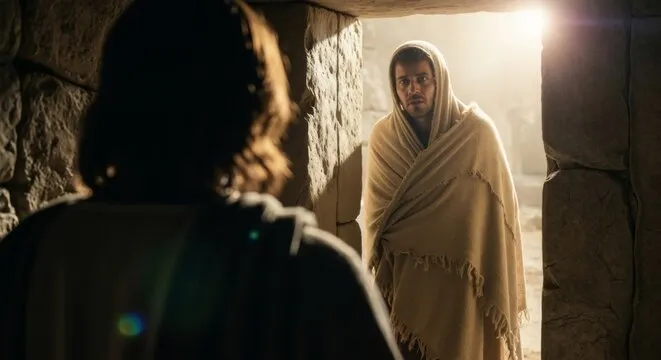
For many of us, we are content to remain in our suffering alone. But Christ calls to us. He says to each one of us, trapped in the tomb of our own suffering, come out! And not only that, He calls for us to be freed from what traps us through the sacraments of the Church. Untie him and let him go. This is a powerful image of what happens when we go to Confession. Christ has called us to life, and through the Church, he sets us free from our sins. As we continue this Lenten season, let us allow Christ to set us free, and let us pray for our loved ones who have gone before us, that they too may experience the freedom that Christ offers to us.
Spanish
Cristo sufrió. Creo que es importante escuchar esas palabras y realmente asimilarlas. Podemos mirar el Crucifijo y pensar, sí, eso debió de ser terrible. Tener clavos en manos y pies. Ser coronado con una corona de espinas. Haber sido azotado hasta el punto de la muerte, y además, haber cargado con aquello que iba a matarte. Y, sin embargo, hoy vemos un sufrimiento mayor que todo ese dolor físico. Vemos el sufrimiento de perder a un amigo.
Creo que muchos de nosotros hemos sufrido con este tipo de sufrimiento. Y cambiaríamos todo el sufrimiento físico del mundo por no tener que experimentar ese sufrimiento. En medio de ese sufrimiento surge la pregunta. ¿Dónde estás, Señor? ¿Por qué me siento tan sola? ¿Por qué permitiste que esto ocurriera? He oído las palabras “Lo siento” y “avísame si necesitas algo”. Estas son las mejores palabras que podemos ofrecer a un amigo o ser querido. Pero la pregunta sigue siendo. ¿Y Dios? ¿No tiene él el poder? Abrió los ojos del ciego. ¿No podría haber salvado a mi amigo? La respuesta es el amor.
El amor de Dios por nosotros no es superficial. No espera simplemente que todo salga bien para nosotros. Nos quiere hasta el punto de experimentar ese sufrimiento de perder a su amigo. ¿Por qué lloró Cristo sino para enseñarnos a llorar? Nos muestra que el sufrimiento, que no formaba parte del plan original de Dios, no es el final. Llora con nosotros y nos invita a compartir nuestro sufrimiento con él. Esto es lo que hacemos cada vez que venimos a misa. Traemos nuestras alegrías y nuestras penas y las unimos al sacrificio de Cristo en la Cruz. Esto no quita el dolor. Pero da sentido a nuestro sufrimiento. Es natural que suframos cuando perdemos a seres queridos. Es sobrenatural cuando unimos nuestros sufrimientos a Cristo para su redención – para liberarlos del purgatorio y que puedan entrar en la vida eterna.
Para muchos de nosotros, estamos contentos de permanecer solos en nuestro sufrimiento. Pero Cristo nos llama. Él dice a cada uno de nosotros, atrapados en la tumba de nuestro propio sufrimiento, ¡salid! Y no solo eso, Él llama a que nos liberemos de lo que nos atrapa a través de los sacramentos de la Iglesia. Desátalo y déjalo ir. Esta es una imagen poderosa de lo que ocurre cuando vamos a confesarse. Cristo nos ha llamado a la vida, y a través de la Iglesia, nos libera de nuestros pecados. Mientras continuamos esta Cuaresma, permitamos que Cristo nos libere y oremos por nuestros seres queridos que nos precedieron, para que ellos también puedan experimentar la libertad que Cristo nos ofrece.
No comment yet, add your voice below!