English
In every Mass we hear the words, “Do this in memory of me.” This is the command that Christ gave to his apostles at the Last Supper when he gave them his body and blood. This short command has two things for us to notice. First, when he says, “Do this,” the word he is using is the same word that refers to offering a sacrifice in the temple. In several other places in the Old Testament, that word is only used when a command is given to the priests to offer an animal. He communicated clearly with his disciples that they were going to offer sacrifice just like the priests in the Old Testament, but in an even better way.
The second part of the phrase is “in memory.” This is not referring to the disciples remembering the meal. This is referring to an act of offering the sacrifice to remind God the Father of Christ’s death on the Cross and the salvation he won for us. God the Father cannot forget things, so he doesn’t need to be reminded of anything. But this action is rather showing that God wills to continue to pour out the grace of the cross in response to the offering of the eucharist.
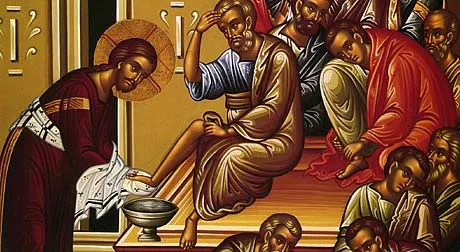
When we celebrate the Eucharist, we are not remembering what God did for us. We are sitting at table with our Lord. And we are also standing under the Cross with Mary and John. Those who celebrate the Passover don’t remember what happened thousands of years ago. Rather, they enter into that same moment with their ancestors and obey the command of God to eat the unblemished lamb. We do not come to Church to watch the priest talk about stuff and eat some bread. We are here in the presence of Christ. We listen to him speak to us directly through the scriptures. We allow him to wash our feet along with his twelve disciples. And we receive him as he offers himself to us in the Eucharist.
In high school and college, I used to study in order to prepare for the test. As a priest, I study and pray in order to prepare to preach a homily. The preparation that we go through in this life is to get us ready for the moment of encounter with Christ. The boys and girls here have been going to classes to get ready to receive their first holy communion. Now the moment has finally arrived. I invite all of us to enter into this moment as if we have been preparing for it since the moment we could first think. This is the high point of our journey, when we will be united with Christ. The words of the prayer are a little different at this mass. I will say, “On the day before he was to suffer for our salvation and the salvation of all, that is today, he took bread in his holy and venerable hands.” Today Christ gives himself to you. Let us share the Last Supper with our Lord. Let us stand beneath his cross as he gives himself up for us. There is no better place to be than where we are today.
Spanish
En cada misa escuchamos las palabras: “Haced esto en memoria mía.” Este es el mandato que Cristo dio a sus apóstoles en la Última Cena cuando les dio su cuerpo y su sangre. Esta breve orden tiene dos cosas que debemos notar. Primero, cuando dice: “Haz esto”, la palabra que usa es la misma que se refiere a ofrecer un sacrificio en el templo. En varios otros lugares del Antiguo Testamento, esa palabra solo se usa cuando se da una orden a los sacerdotes para ofrecer un animal. Comunicó claramente a sus discípulos que iban a ofrecer sacrificios igual que los sacerdotes del Antiguo Testamento, pero de una manera aún mejor.
La segunda parte de la frase es “en memoria”. Esto no se refiere a que los discípulos recuerden la comida. Esto se refiere a un acto de ofrecer el sacrificio para recordar a Dios Padre la muerte de Cristo en la Cruz y la salvación que nos consiguió. Dios Padre no puede olvidar las cosas, así que no necesita que le recuerden nada. Pero esta acción muestra más bien que Dios quiere seguir derramando la gracia de la cruz en respuesta a la ofrenda de la eucaristía.
Cuando celebramos la Eucaristía, no recordamos lo que Dios hizo por nosotros. Estamos sentados a la mesa con nuestro Señor. Y también estamos bajo la Cruz con María y Juan. Quienes celebran la Pascua judía no recuerdan lo que ocurrió hace miles de años. Más bien, entran en ese mismo momento con sus antepasados y obedecen el mandato de Dios de comer el cordero inmaculado. No venimos a la iglesia para ver al sacerdote hablar de cosas y comer pan. Estamos aquí en presencia de Cristo. Le escuchamos hablarnos directamente a través de las escrituras. Le permitimos lavar nuestros pies junto con sus doce discípulos. Y le recibimos tal como se ofrece a nosotros en la Eucaristía.
En el instituto y la universidad, solía estudiar para prepararme para el examen. Como sacerdote, estudio y rezo para prepararme para predicar una homilía. La preparación que realizamos en esta vida es para prepararnos para el momento del encuentro con Cristo. Los chicos y chicas aquí han estado yendo a clase para prepararse para recibir su primera comunión. Ahora finalmente ha llegado el momento. Invito a todos a entrar en este momento como si nos hubiéramos estado preparando para él desde el momento en que pudimos pensar por primera vez. Este es el punto más alto de nuestro camino, cuando estaremos unidos con Cristo. Las palabras de la oración son un poco diferentes en esta misa. Diré: “El día antes de que sufriera por nuestra salvación y la salvación de todos, es decir, hoy, tomó el pan en sus manos santas y venerables.” Hoy Cristo se entrega a vosotros. Compartamos la Última Cena con nuestro Señor. Permanezcamos bajo su cruz mientras se entrega por nosotros. No hay mejor lugar que donde estamos hoy.
No comment yet, add your voice below!